
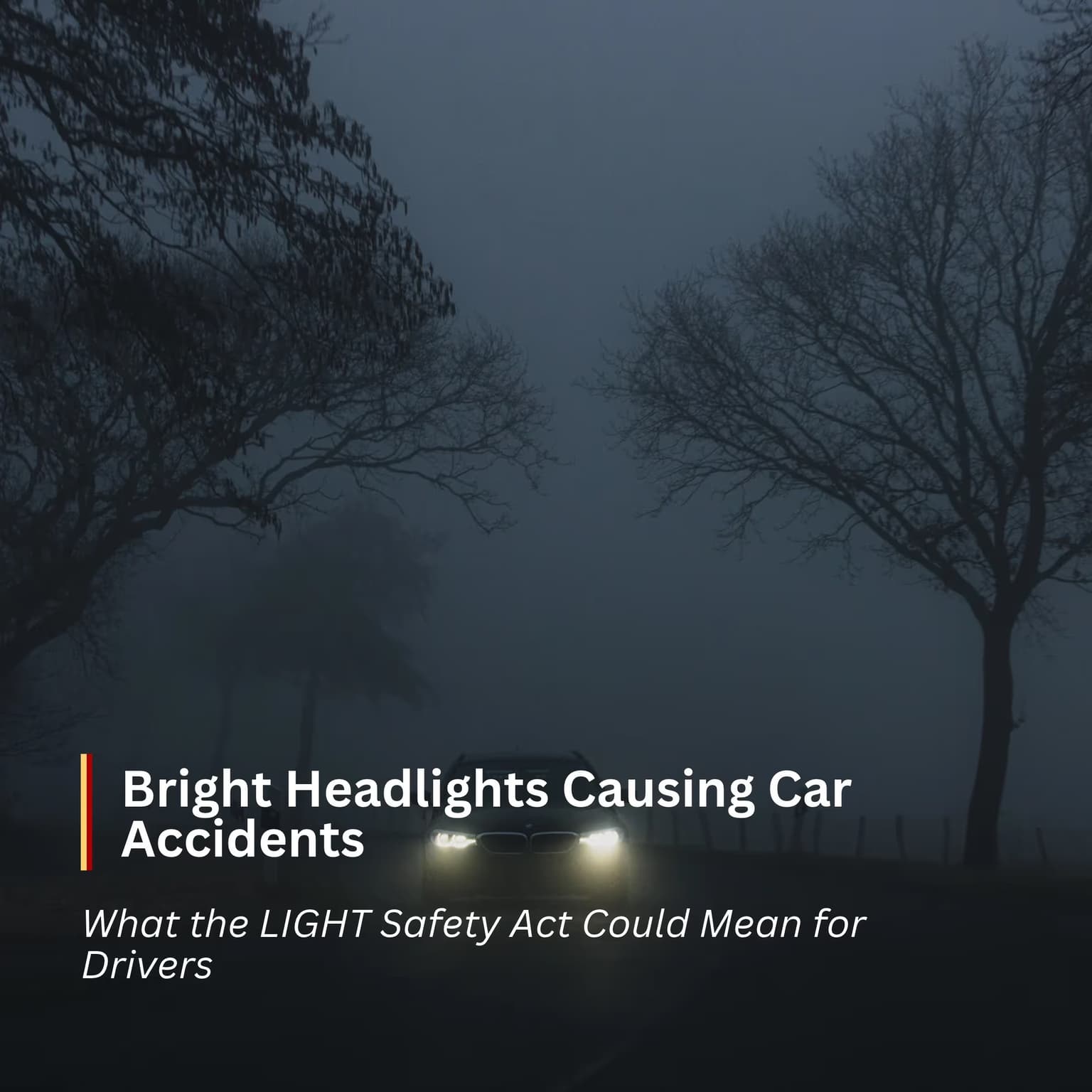
Driving at night can cause various dangers, leaving individuals in a state of fear and uncertainty. Accidents can happen due to bright headlights and can cause serious or sometimes life-threatening injuries. Understanding the steps to take when a vehicle collision occurs from a bright headlight is important for maintaining the safety of yourself and those around you on the road.
Why Are Bright Headlights Becoming a Road Safety Concern?
Modern vehicles usually use light-emitting diode (LED) headlights, which can provide improved illumination and energy efficiency. However, certain headlight designs may produce uncomfortable glare for other drivers and pedestrians. The following are various factors that can cause blinding headlight glare.
- Headlights with bright LED’s
- Modifications done to the headlights during the purchase of the vehicle
- Conditions of the road, especially during rain or excessive fog
How Can Bright Headlights Cause Car Accidents?
Bright headlights may contribute to vehicle collisions for many reasons. The glare from these headlights can temporarily interfere with a driver's ability to see clearly. This is especially concerning on two-lane highways, where vehicles travel in opposite directions without physical barriers.
Potential consequences may include reduced visibility, delayed reactions, difficulty recognizing pedestrians, and problems maintaining lane position.
For example, a driver traveling through a poorly illuminated intersection in Los Angeles may come across an approaching vehicle with improperly aimed headlights. If the glare causes the driver not to see clearly, they may struggle to recognize a pedestrian entering the crosswalk.
What Is the LIGHT Safety Act, H.R. 7772?
The Limiting Intense Glare for Highway and Two-lane Safety Act, commonly called the LIGHT Safety Act, was introduced in the U.S. House of Representatives on March 3, 2026, by Representative Marie Gluesenkamp Perez of Washington.
The proposed legislation directs the Secretary of Transportation, acting through the National Highway Traffic Safety Administration (NHTSA), to revise Federal Motor Vehicle Safety Standard No. 108. The bill would require:
- Establishing a maximum allowable brightness standard for low-beam vehicle headlights.
- Expressing the limit in lumens or another appropriate photometric measurement.
- Issuing a final rule within one year after the legislation becomes law.
How Could the LIGHT Safety Act Affect California Drivers?
If enacted, the LIGHT Safety Act could influence future vehicle headlight manufacturing standards nationwide, including vehicles sold in California. Manufacturers might need to adjust headlight designs to comply with new federal brightness requirements.
However, the legislation would not automatically establish liability whenever bright headlights contribute to an accident. This is important to understand in order to make sure you are keeping yourself and others safe on the road. In addition, existing California traffic laws and negligence principles would continue to play an important role in determining responsibility. If an individual is driving without exercising reasonable care, then they may be held responsible for causing a vehicle collision.
Separately, NHTSA announced in October 2026 that it was examining updates to federal vehicle lighting regulations, including headlight glare, LED technology, automatic high beams, and headlamp positioning.
What Does California Law Say About Bright Headlights?
California already regulates the use of vehicle headlights. Under California Vehicle Code Section 24409, drivers must adjust their headlights under certain circumstances:
- When approaching an oncoming vehicle within 500 feet, drivers must use lighting that does not shift the glaring rays into other individuals’ eyes.
- When following another vehicle within 300 feet, drivers must use the required lower-beam setting.
Who May Be Liable for a Car Accident Caused by Bright Headlights?
Determining potentially responsible parties is often very challenging, and usually depends on all the surrounding evidence of the accident itself.
Negligent Drivers
A driver may face liability if they improperly use high beams, fail to maintain their headlights, or operate their vehicle without reasonable care. Under California Civil Code Section 1714, individuals usually have a duty to exercise reasonable care to reduce the risk of causing injury to others.
Vehicle Manufacturers
Vehicle manufacturers may be held liable for a vehicle collision if they did not produce the correct headlight system. Inadequate headlights may cause serious injuries and leave individuals unsure of the next steps to take to recover.
The Importance of Seeking Legal Guidance and Support After a Headlight Vehicle Collision
If you believe excessive headlight glare contributed to a California car accident, taking appropriate steps may help preserve important evidence. After a collision involving a vehicle's headlights, you should consider the following.
- Seek medical attention as soon as it is possible and safe to do so.
- Documenting the scene of the accident
- Identifying nearby witnesses and collecting their contact information
- Preserving all available recordings
- Reporting the car accident as soon as possible
- Seeking legal guidance and support
How KAASS LAW Can Help
Accidents involving headlight glare can present complicated questions about visibility, driver conduct, vehicle equipment, and responsibility. KAASS LAW may be able to help individuals with personal injury matters in Los Angeles, Glendale, Pasadena, and surrounding Southern California communities.
Our attorneys can review the circumstances of a collision, examine available evidence, assess potential liability, and explain legal options under California law. Contact KAASS LAW today to learn more and discuss your potential options.