
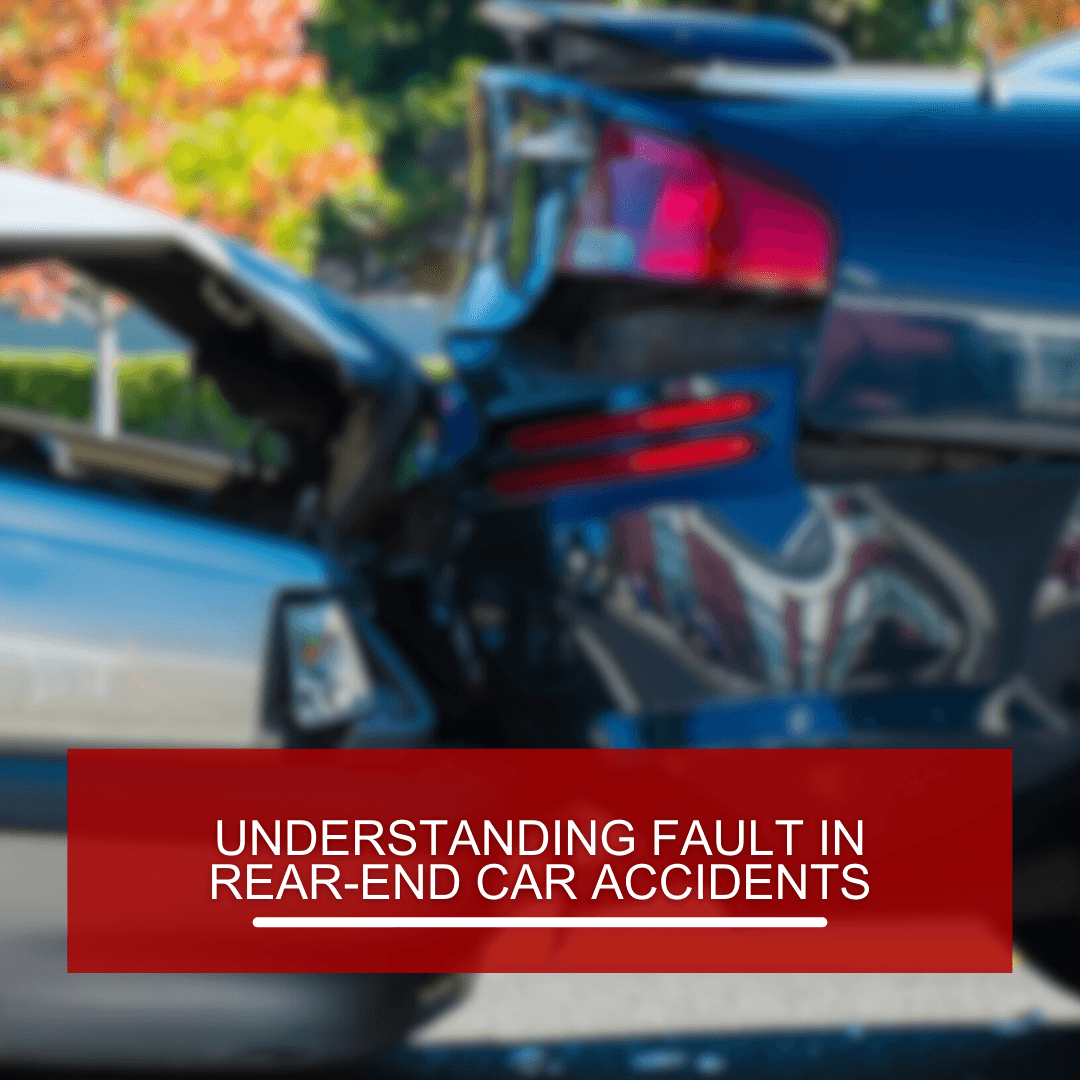
Understanding Fault in Rear-End Car Accidents
Oftentimes, the rear driver is considered at fault in a rear-end collision. Many individuals who have been involved in vehicle accidents believe that if you have been struck from behind, the accountability automatically falls on the driver in the back. While this assumption is common, the law does not always treat every rear-end accident the same way. Determining liability depends on the specific facts of the crash, each driver's behavior, and whether negligence played a role in causing the collision.
When is a Rear-End Collision Not Your Fault: Key Exceptions
Rear-end collisions are one of the most common types of motor vehicle collisions. When rear-end accidents occur, individuals automatically assume that the driver in the back is responsible for the incident. While this is true in most cases, it is not a universal rule.
Drivers are expected to maintain a safe following distance between themselves and the vehicle in front of them. This is to prevent collisions that can arise from sudden stops or dangerous circumstances. When drivers do not uphold these safety precautions, they often end up getting involved in a collision, causing danger to themselves and others around them.
Hazardous Road Conditions
Hazardous or poor road conditions often make driving challenging and can result in rear-end collisions. If this occurs, liability can shift away from the rear driver. The following can make drivers brake suddenly, causing rear-end vehicle collisions.
- Potholes
- Road construction zones
- Sudden detours
- Objects in the road (debris or stalled vehicles)
When these scenarios occur, the city or construction company responsible for maintaining the overall safety of the roads may be held responsible.
Extreme Weather Conditions
Extreme weather conditions can create unsafe driving conditions, causing individuals to get into rear-end collisions. Weather conditions such as the following create hazardous driving situations:
- Heavy rain
- Fog
- Snow
- Ice
Dangerous weather conditions make it harder for drivers to see others and the vehicles ahead of them. Slippery roads can make stopping difficult even when a driver is maintaining a safe distance between their vehicle and the vehicle in front of them. During extreme weather conditions, if the driver ahead suddenly or recklessly stops, then they may be responsible for the collision.
Front Driver’s Reckless or Illegal Actions
Sudden and unpredictable lane changes can result to read-end collisions. The front driver can be at fault for an accident when they unexpectedly cut off other drivers or run red lights. The following may be needed to prove whether the front driver was at fault for a vehicle collision:
- Strong evidence
- Eyewitness reports
- Police citations
- DUI test results
- Surveillance footage (traffic cameras or dashcams)
How to Prove You Were Not the At-Fault Driver in a Car Crash
After a rear-end collision, many drivers may fear that they will automatically be at fault simply because their vehicle struck the one in front. While the rear driver is often held liable, that is not always the case. Liability in a vehicle collision is determined by the evidence and documentation presented. Proving another’s negligence can help in proving your innocence in the accident.
One of the most important elements of a vehicle collision is the police report. The following takes place when officers arrive at the scene of an accident:
- They evaluate statements from drivers and witnesses
- Examine vehicle damage
- Document road conditions
Their observations can heavily impact how insurance companies assess the overall claim. Although a police report is not the final legal decision, it often becomes the starting point for holding parties accountable for misconduct.
Seeking Legal Representation
Seeking legal guidance can help victims and their loved ones understand their rights and receive the justice and compensation that they deserve. The proper legal support and representation can help create a positive outcome for victims who have been involved in rear-end collisions. It is important to speak to an experienced attorney who understands the legalities of rear-end vehicle collisions to ensure you are receiving the best care possible.
How KAASS LAW Can Help
At KAASS LAW, we understand the fear victims feel when they have been involved in rear-end vehicle collisions. KAASS LAW helps clients by handling the legal complexities of their claims to ensure they receive the justice they deserve. KAASS LAW can help by:
- Conducting a detailed investigation of the collision
- Collecting and preserving key evidence
- Obtaining traffic camera and surveillance footage
- Interviewing witnesses and reviewing police reports
- Calculating the value of the damages caused
If you or a loved one has been injured in a rear-end vehicle collision, KAASS LAW is here to help. Our experienced attorneys will help you understand your options and seek the justice and compensation that you deserve. Call KAASS LAW today to get the proper legal support and guidance you need to help your claim and hold liable parties accountable for misconduct.